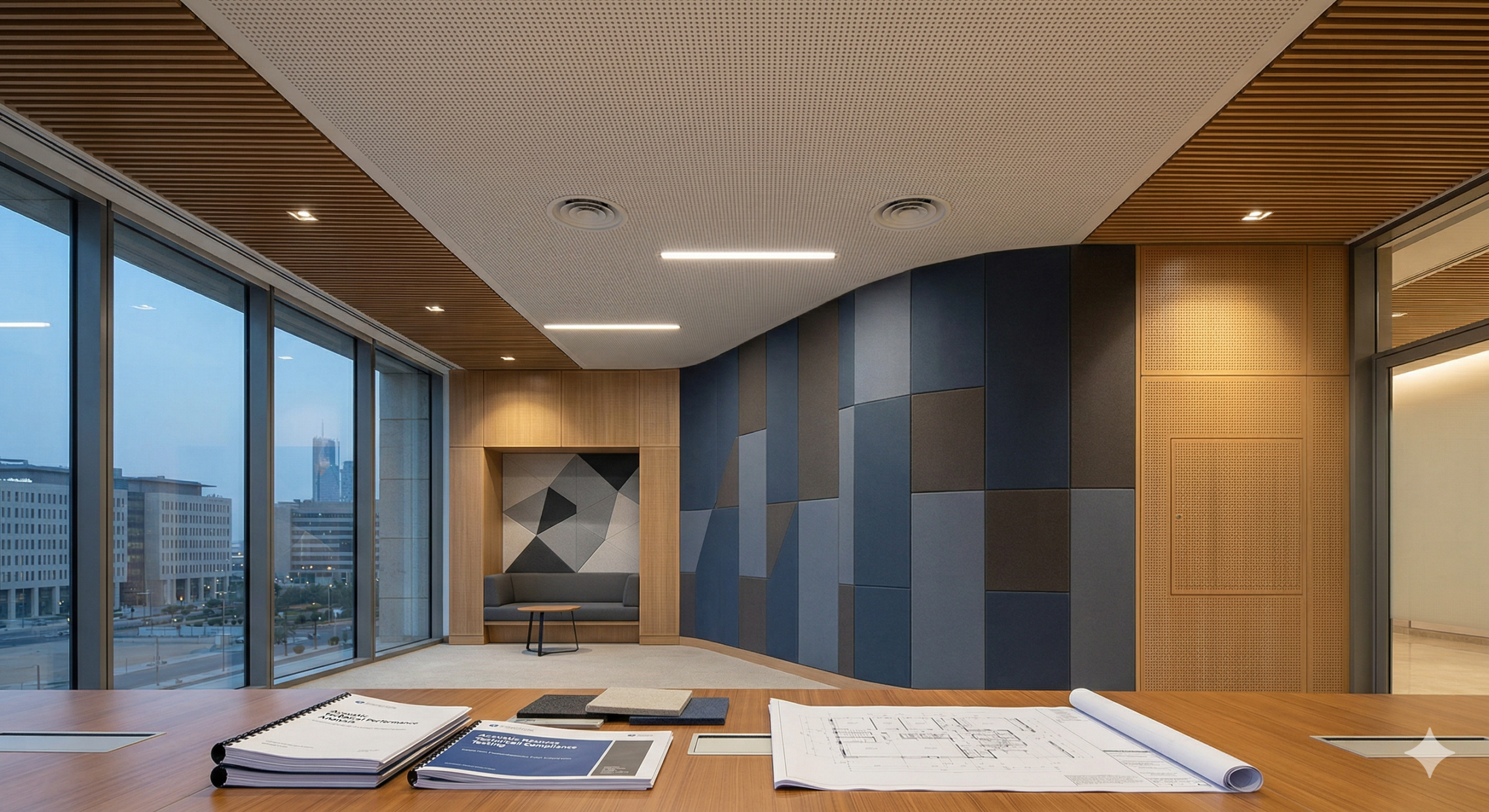
Architectural acoustic materials must do more than absorb sound.
They must:
- Control reverberation
- Improve speech clarity
- Enhance privacy
- Integrate with architecture
- Comply with Saudi Building Code
We supply and install performance-certified architectural acoustic systems in Saudi Arabia, engineered for measurable results.
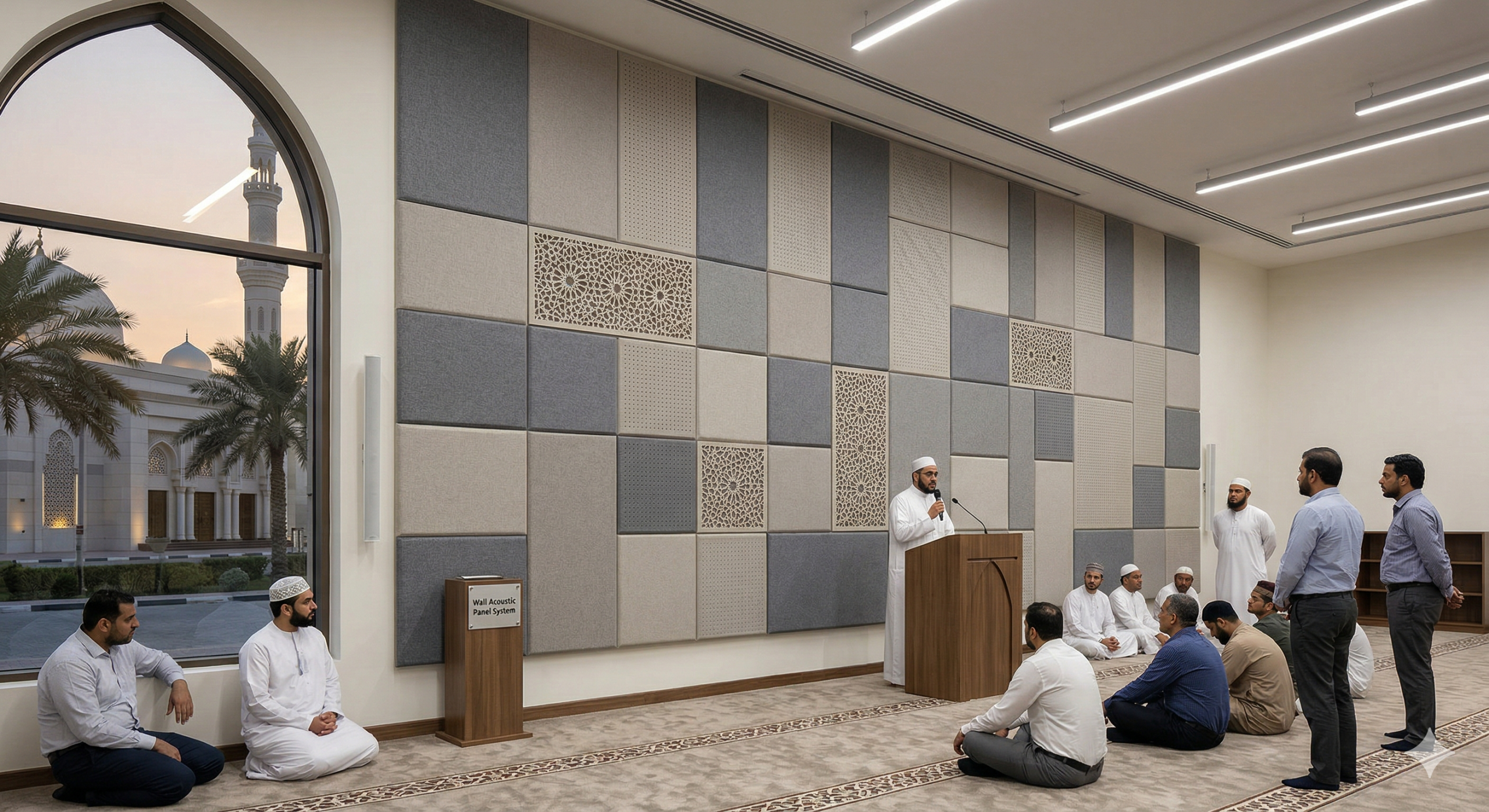
Wall Acoustic Panel Systems
Used where reverberation control and speech clarity are critical.
Material Composition
- High-density fiberglass core (40–96 kg/m³)
- PET acoustic core (recycled polyester option)
- Mineral wool absorptive core
- Fabric, vinyl, or perforated facing
- Optional fire-rated backing
Typical Thickness
- 25 mm
- 40 mm
- 50 mm
- 75 mm (enhanced low-frequency absorption)
Acoustic Performance
Thickness | NRC Range | Frequency Focus |
25 mm | 0.65 – 0.80 | Mid frequencies |
40–50 mm | 0.80 – 0.95 | Broad spectrum |
75 mm | 0.95 – 1.00 | Extended low-frequency control |
Applications
- Mosques and prayer halls (RT60 control)
• Conference rooms
• Schools and lecture halls
• Hospital consultation rooms
• Corporate offices
• Government meeting rooms
Â
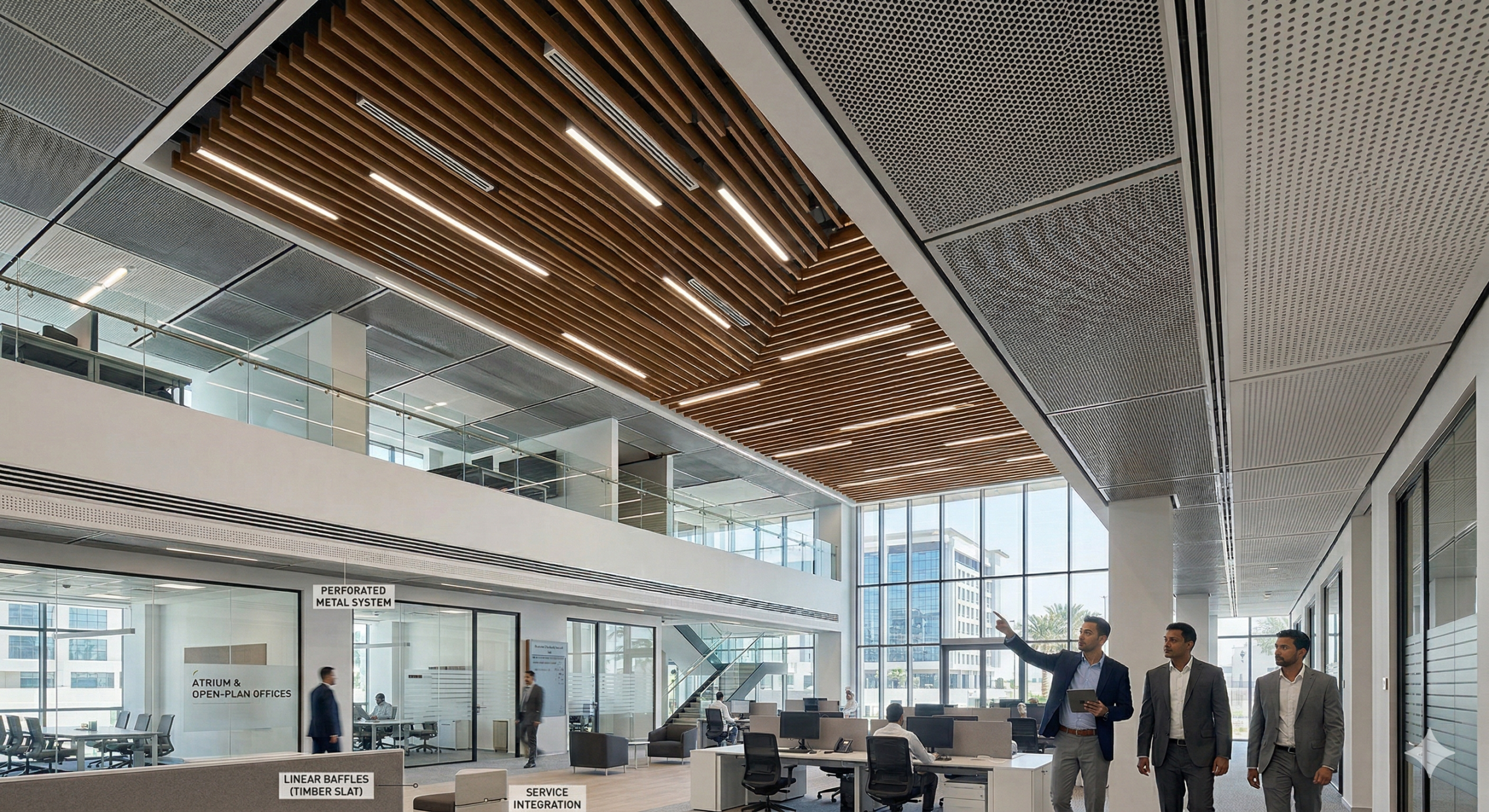
Acoustic Ceiling Systems
Ceilings play the dominant role in room absorption.
System Types
- Mineral fiber acoustic tiles
- Perforated gypsum board with backing
- Metal perforated ceiling with acoustic infill
- Timber slat acoustic ceilings
- Suspended acoustic baffles
Acoustic Performance
System Type | NRC Range | Key Benefit |
Mineral Fiber Tile | 0.70 – 0.90 | General office control |
Perforated Gypsum | 0.60 – 0.85 | Integrated architectural finish |
Metal Perforated | 0.75 – 0.95 | Durable / commercial use |
Timber Slat System | 0.65 – 0.90 | Aesthetic + absorption |
Suspended Baffles | 0.80 – 1.00 | Large volume spaces |
Applications
- Classrooms
- Hospitals
- Open-plan offices
- Atriums
- Commercial lobbies
- Religious spaces
Proper installation includes:
- Void depth coordination
- Service integration
- Continuous backing absorption
- Edge sealing
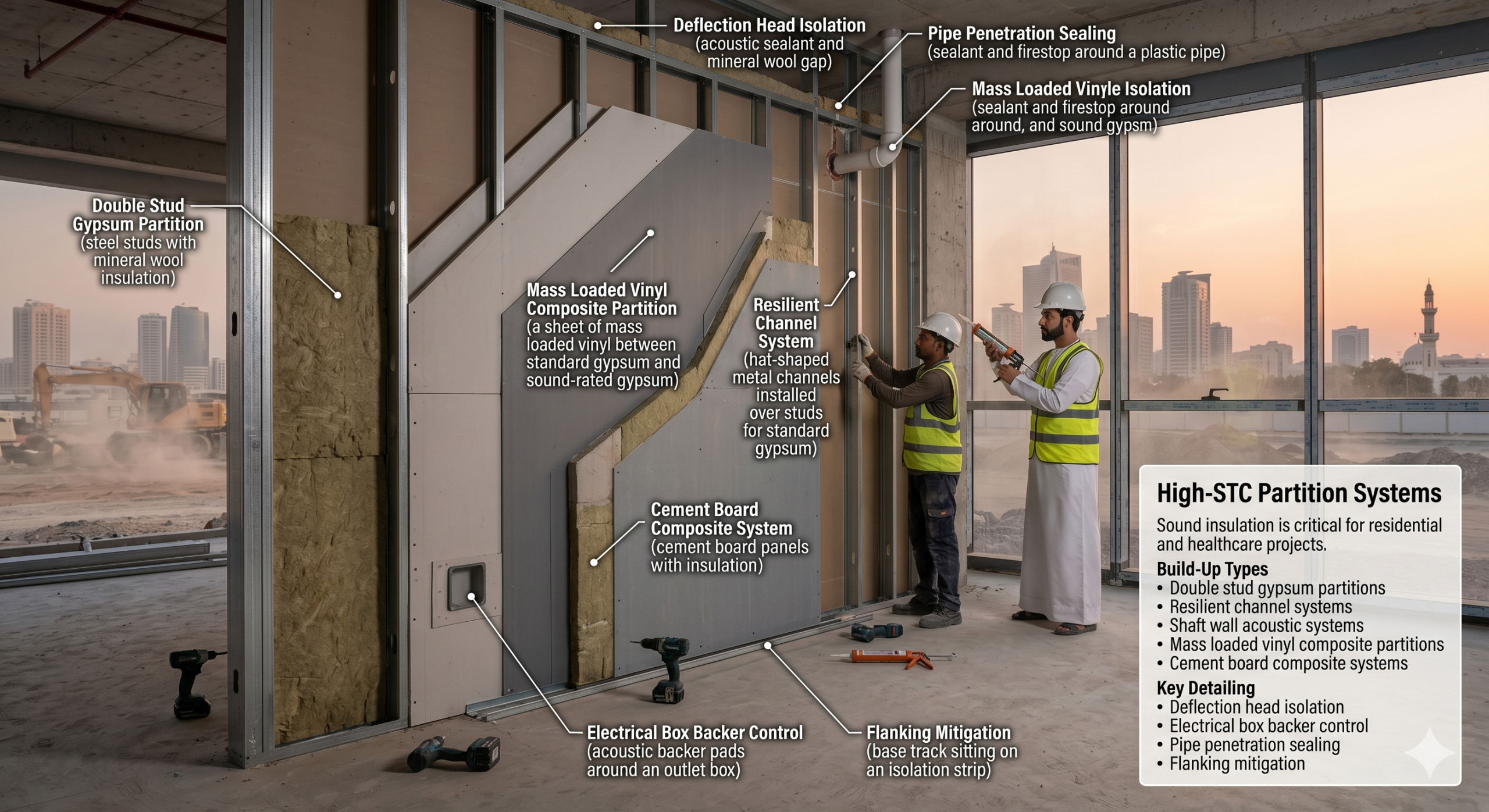
High-STC Partition Systems
Sound insulation is critical for residential and healthcare projects.
Build-Up Types
- Double stud gypsum partitions
- Resilient channel systems
- Shaft wall acoustic systems
- Mass loaded vinyl composite partitions
- Cement board composite systems
Acoustic Performance
Partition Type | STC / Rw Range | Typical Use |
Standard Double Gypsum | 45–50 | Offices |
Double Stud Decoupled | 55–65 | Residential / Healthcare |
MLV Composite | 50–60 | Retrofit upgrades |
Shaft Wall System | 50–60 | Service risers |
Key Detailing
- Deflection head isolation
- Electrical box backer control
- Pipe penetration sealing
- Flanking mitigation
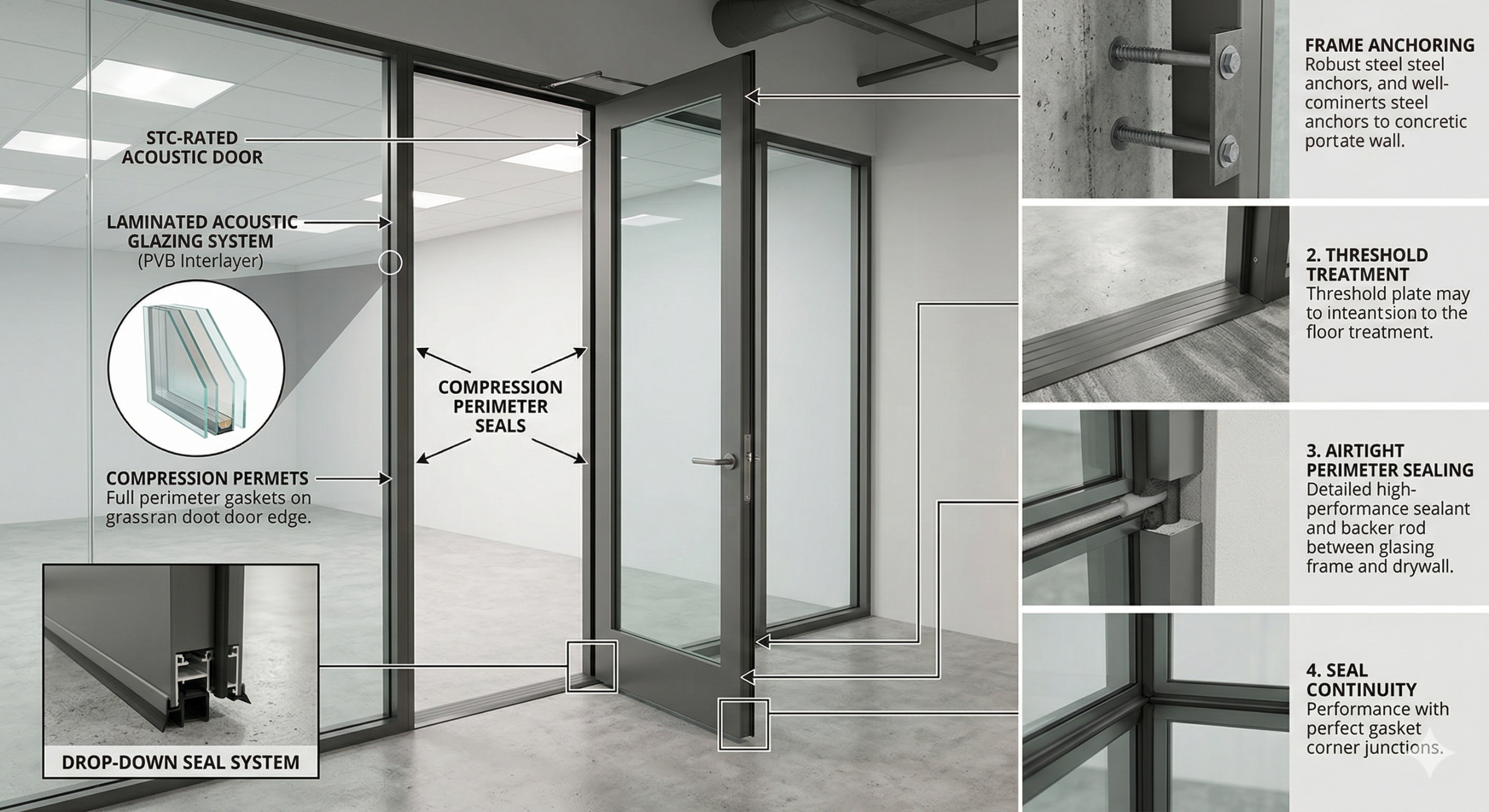
Acoustic Doors & Glazing Systems
Doors and glazing are common weak points in acoustic assemblies.
Door Systems
- Solid core acoustic doors
- Steel acoustic doors
- Timber acoustic doors
- STC-rated door sets with seals
Performance range:
STC 35 – 55 depending on configuration
Glazing Systems
- Laminated acoustic glass
- Double-glazed acoustic units
- Asymmetric glazing assemblies
Performance range:
Rw 35 – 50 depending on glass thickness and air gap
Critical installation details:
- Perimeter compression seals
- Drop-down acoustic seals
- Threshold isolation
- Airtight frame sealing
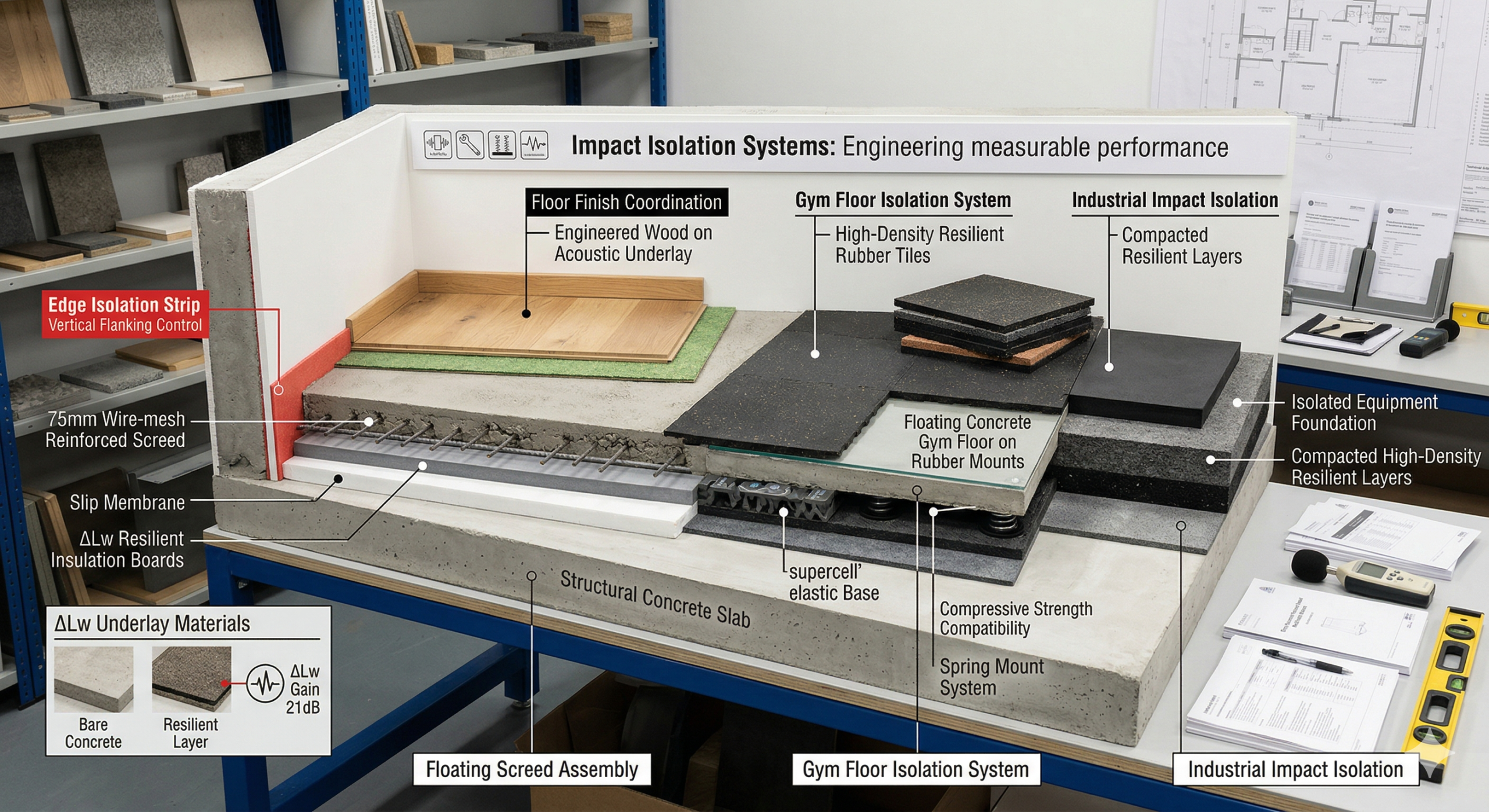
Impact & Floor Isolation Systems
Impact noise control is critical in villas and high-rise towers.
Material Types
- Rubber crumb underlay
- Cross-linked foam underlay
- Mineral fiber impact layers
- Spring-isolated floating floors
- Composite resilient mat systems
Performance
System | ΔLw Improvement | Application |
Basic Underlay | 15–20 dB | Residential apartments |
High Density Mat | 20–28 dB | Premium residential |
Floating Floor (Spring) | 30–40 dB | Gyms / Studios |
Installation considerations:
- Edge isolation strips
- Wall separation gap
- Screed thickness compatibility
- Load-bearing validation
Fire & Compliance Integration
All architectural acoustic systems are selected considering:
- ASTM E84 fire rating
- EN ISO 13501-1 classification
- ASTM C612 mineral wool compliance
- Project-specific fire strategy
Where required, we support:
- ISO 3382 reverberation testing
- ISO 16283 airborne and impact testing
- SBC acoustic compliance documentation
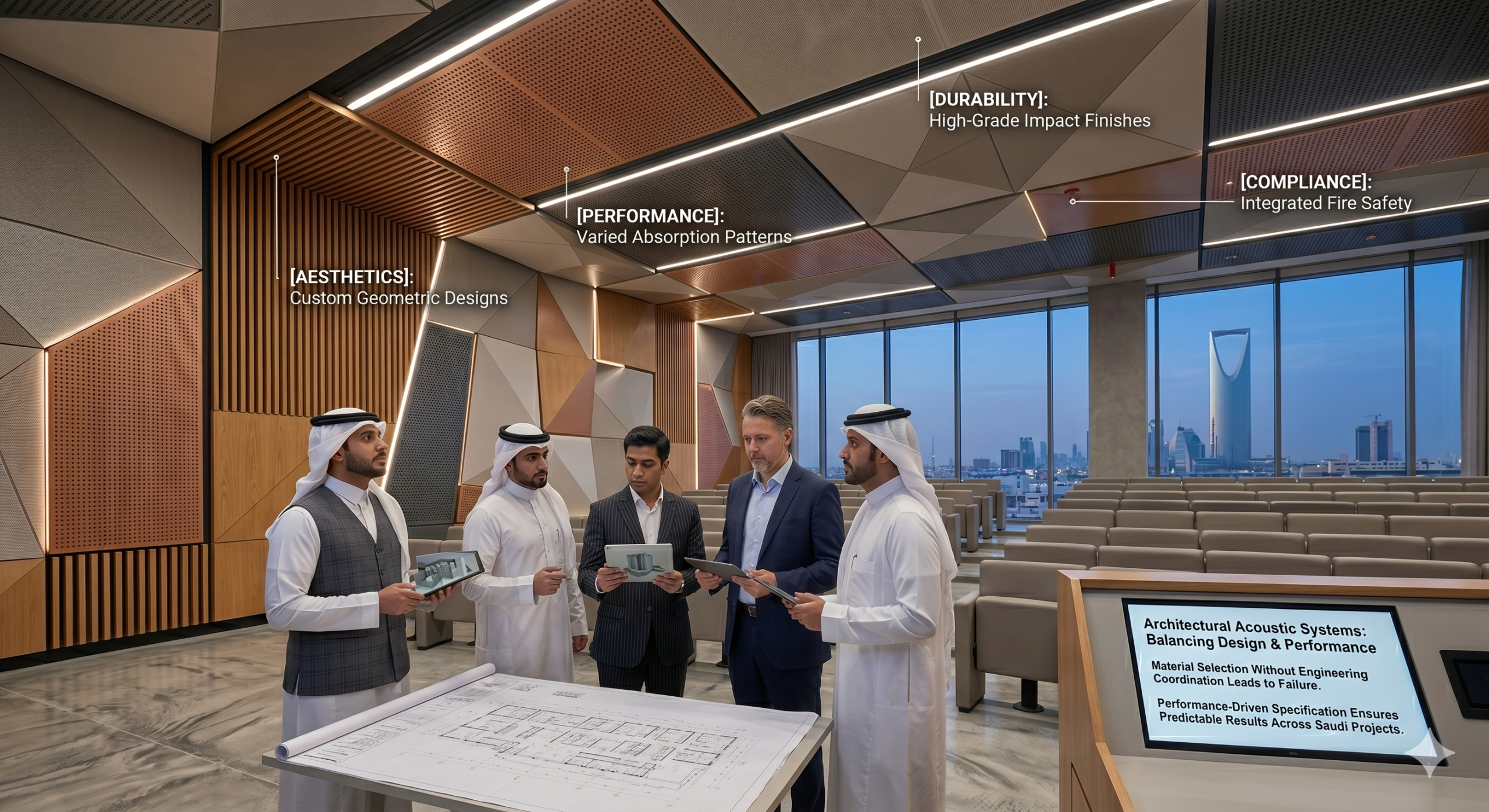
Architectural acoustic systems must balance:
- Performance
- Aesthetics
- Durability
- Compliance
Material selection without engineering coordination leads to failure.
Performance-driven specification ensures predictable results across Saudi projects.